
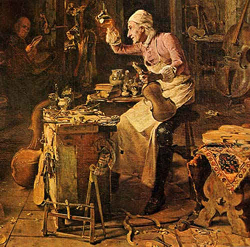
What’s better, a new violin or an old violin? This is a loaded question, but let us offer a few interesting perspectives. People in general (especially amateurs or those that don’t actually play) tend to readily think that old violins are always better than new. Older violins sound better because they are, well…older. Not true! Or, that they really knew how to make violins better 100 years ago and that today, everything is ‘cheap’ or mass produced. There are a lot of mass produced, factory violins made a hundred years ago, that are now…old.
Some brand new violins made today can cost upwards to $40,000. So much for cheap!
Here are a few thoughts that come into play on deciding on a new, or buying a violin:
- when referring to ‘old’ violins, we’re not thinking of the great Italian, French, English or German “master" luthier violins, but the abundant factory made type, older violins that proliferated from Europe in the late 1800’s to early 1900’s.
- old violins are not better if in the first place if the materials used on it was inferior or if the workmanship is poor. Just because the violin is old, doesn’t guarantee that the violin was/is well made. If poor materials were used then, sound suffered and still, will continue to sound bad, no matter how old it is.
- lots of mass produced (old) violins were made cheaply and quick. Often, the tops and backs were not graduated properly. Usually the tops were too thick. Thick tops usually make ‘hard’ violins to play on. Unresponsive. They were made this way because they were trying to make violins as quickly as possible and to the masses of people wanting a cheap violin.
Again, it depends on materials used and quality of the violin maker’s workmanship. Often the mass produced violins of 100 hears ago were just that! Whereas a lot of the new, Chinese violins today are made with the same Stradivarian techniques and high standards used by some of the best makers of yesteryear. You can get a lot for you money on a new violin.
- Manufacturer
- Combined Custom Sets
- Pirastro Violin Strings
- Thomastik-Infeld Violin Strings
- D’Addario Violin Strings
- Corelli Strings
- Prim
- Warchal
- Westminster E’s
- Baroque Violin Strings
- Brands
- You name it…we combine it!
- Evah Pirazzi, Passione, Obligato, Gold Label, Olive, Chorda, Eudoxa and Paranito and Tonica
- Dominants, Infeld Blue, Infeld Red, Peter Infeld and Vision
- Helicore, Zyex, Prelude, Golden Spiral, Kaplan, Pro Arte
- Helicore, Kaplan and Prelude cello strings
- Prim
- Brilliant, Nefrit, Ametyst, Karneol
- Westminster E strings in all sizes
- Strings geared to be used in “period" music…gut strings.
Here's helpful information for customers unsure about which violin strings would best suit their needs & more related links:
- When to change your strings
- What Violin Strings Are Good for Beginners
- How to clean your strings
- Which Violin Strings to Buy for a Rental?
- What so great about Evah Pirazzi Violin Strings?
- Thomastik-Infeld Dominant Strings
- Famous Violinst’s String Brand Choices (Interesting!)
- Violin String Combinations
- The Upright Bass
- Good Student Violin Strings
- Cello Strings
- Bobelock Violin Case
- Upright Bass Strings
- Bam Violin Cases
- Placing an Order
- Old Violin Versus New Violin
- Violin Humidity
- Phoenix Violin Teachers
- Studying the Violin in College
- Violin Orchestra Audition
- Cheap Student Violin Strings
- Privacy Policy
- Special E String Packet Sampler …the VSESP!
- Virtual Violin Lessons Orchestra Auditions